Edge Metal, Coping, and Gutters in Syracuse, NY
Edge metal, coping, and gutter repair for Syracuse, NY commercial roofs - the details that take the worst of ice-dam and freeze-thaw damage every winter.
The Edge Details That Take the Worst of a Syracuse Winter
Edge metal, coping, and gutter systems fail on their own timeline, separate from the field membrane. In this climate they often fail first, because they're the part of the roof that ice grabs onto hardest.
Why the Edge Is the Weak Point Here
Ice dams form at roof edges for a simple reason: that's where heat loss from the building meets the coldest air, so snow melts and refreezes right at the perimeter faster than anywhere else on the field. That repeated freeze-thaw cycle works fasteners loose, cracks sealant joints, and eventually pries coping and edge metal away from the substrate underneath. A detail that looked solid in October can be visibly lifted by February after a hard winter.
We treat edge metal and coping as a separate inspection category from the membrane field, because the failure mechanism and the fix are both different.
Coping Displacement and What Causes It
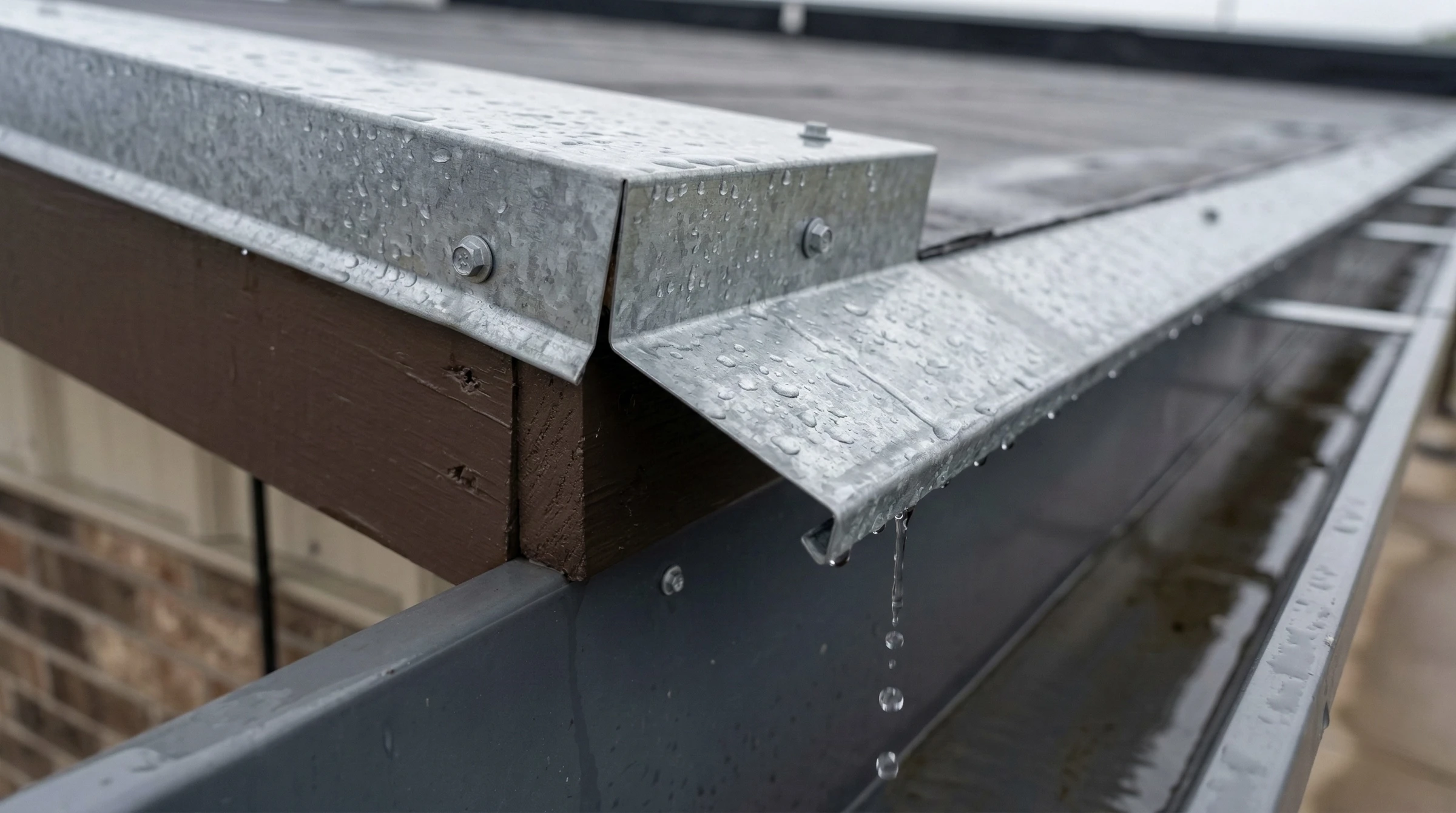
Coping caps on parapet walls take direct impact from ice buildup and expansion. Once a joint opens even slightly, meltwater gets behind the cap, freezes, and expands the gap further on the next cycle. We check coping joints for movement, not simply visible gaps, since a cap can look seated from the ground while actually being loose enough to lift in the next wind event.
Repair usually means resealing joints properly, replacing damaged sealant with material rated for this climate's temperature swing, and re-securing fasteners that have backed out from repeated movement. Where coping has been displaced repeatedly at the same spot, we look at whether the underlying wall condition or fastening pattern needs to change, not simply the sealant.
Edge Metal and Fastener Backout
Metal edge and gravel stop details take a similar beating. Fasteners back out gradually as the metal expands and contracts through freeze-thaw cycles, and a section that's holding today can work loose enough to catch wind by spring. We check fastener spacing and tightness on every edge inspection, since this is one of the more common findings on older Syracuse roofs that haven't had recent edge-specific attention.
Gutters and Downspouts in a Snow-Heavy Climate
Commercial gutters and downspouts in this region take on a job most southern markets don't ask of them - clearing meltwater fast enough that ice doesn't build up and block the run entirely. A gutter that ices shut backs water up under roofing material at the edge, which is one of the more common causes of edge-area leaks we see in late winter. Heat trace can help on buildings with a history of this problem, but it's not a substitute for a gutter and downspout system that's properly sized and pitched to begin with.
- Coping joint inspection for movement, not simply visible gaps
- Sealant replaced with material rated for this region's temperature swing
- Fastener spacing and tightness checked on all edge metal runs
- Gutter and downspout capacity checked against actual meltwater volume
- Ice buildup patterns tracked at repeat problem areas
- Heat trace evaluated for buildings with a recurring ice-blockage history
Catching Edge Problems Before They're Leaks
Edge and coping damage almost always shows up before an interior leak does - a slightly lifted cap, a loosened fastener, sealant that's starting to crack. That's exactly why the fall visit in a preventive maintenance program spends real time on these details specifically, rather than treating them as a footnote to the membrane inspection.
Older Downtown Buildings and Historic Coping Profiles
Buildings in the downtown core and around Solvay's legacy industrial blocks sometimes carry older masonry coping or built-up edge details that predate the metal profiles used on most modern commercial roofs. Those older assemblies need a different repair approach than a standard prefinished metal cap - often involving masonry-compatible sealants and flashing details that respect the original wall construction rather than forcing a modern edge profile onto a building that wasn't built for one.
We treat those buildings as their own category during inspection, since the repair materials and techniques that work on a 1990s metal-panel building don't necessarily hold up the same way on a masonry parapet built decades earlier.
That distinction matters most when an owner is comparing repair quotes, since a lower bid that doesn't account for masonry-compatible materials on an older building can end up costing more once the mismatched repair fails within a season or two.
Edge Metal and Coping Questions
Why does coping fail more often than the roof membrane itself?
Coping sits at the roof edge, exactly where ice dams form and freeze-thaw cycling is most aggressive. It takes more movement stress over a winter than the flatter, more insulated field membrane does.
Can loose coping cause a leak even if the membrane is fine?
Yes. Water can get behind a lifted coping joint and travel down into the wall or roof assembly without ever crossing the membrane field directly.
Do gutters actually matter on a flat commercial roof?
Where they exist, yes - an iced-shut or undersized gutter backs meltwater up under edge materials, which is a common source of late-winter edge leaks in this climate.
How often should edge metal and coping be checked?
We check them as part of every seasonal maintenance visit, since freeze-thaw damage at the edge can progress faster than membrane wear over a single winter.
Is heat trace worth installing on our gutters?
It can help buildings with a repeat ice-blockage history, but it works best alongside a properly sized and pitched gutter system, not as a fix for an undersized one.
Questions About Edge Metal, Coping, and Gutters in Syracuse, NY
Ready to Review the Roof?
Service Area
Syracuse, NY
Roofing Category
Assessment Focus
Condition
Drainage
System options
Occupied operations
Next Step