60-Mil TPO Roofing in Syracuse, NY
60-mil TPO membrane for Syracuse commercial reroofs: welded-seam performance under lake-effect snow load, cold-weather install limits, and where we spec it.
Why 60-Mil TPO Is Our Default Reroof Spec Around Syracuse
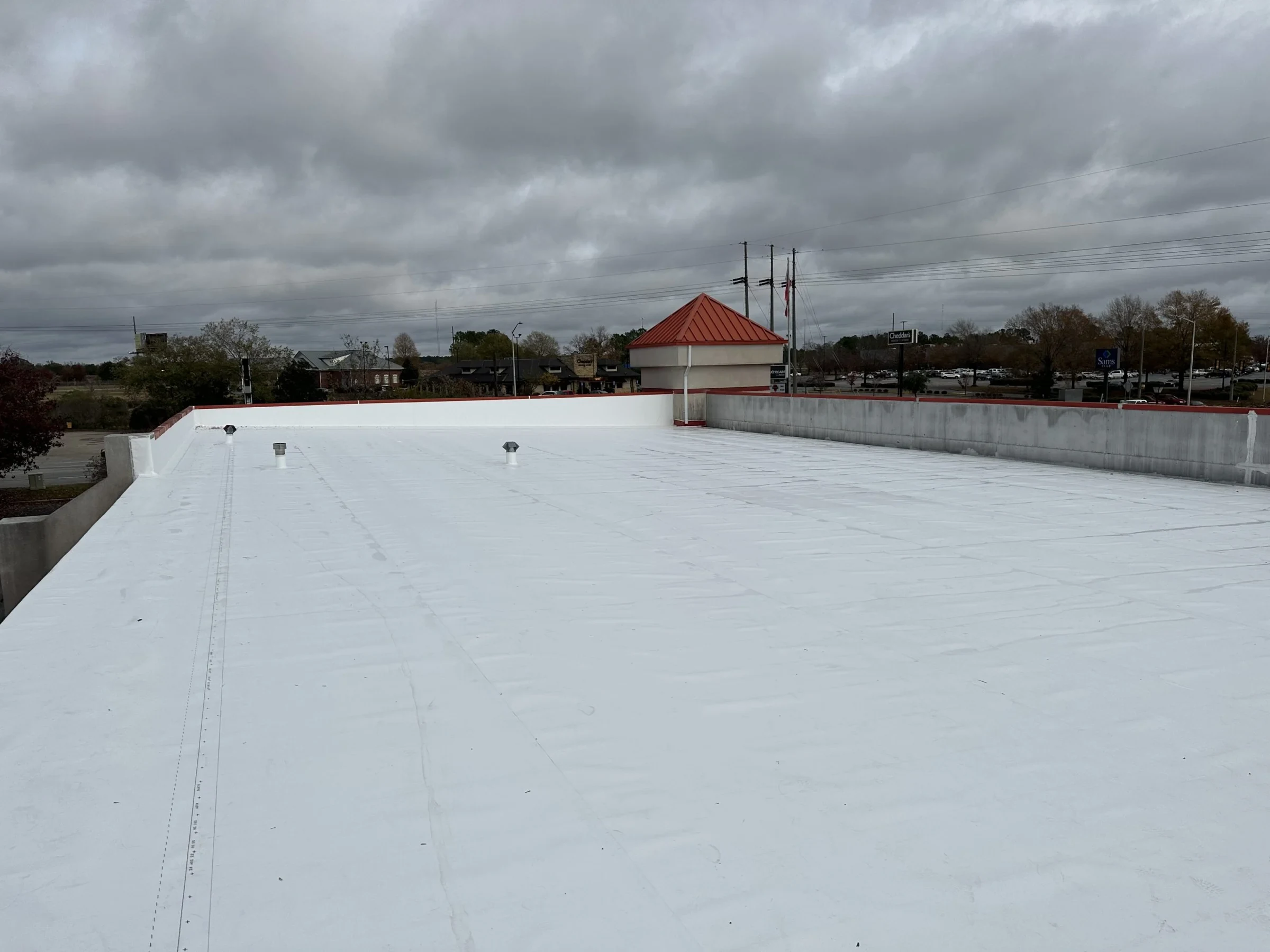
Sixty-mil TPO is the membrane we bid most often on standard commercial reroofs across Onondaga County. It's not the thickest sheet on the market, but for a straightforward low-slope roof without heavy rooftop traffic, it's the gauge that balances cost against the punishment this climate delivers.
What 60-Mil Actually Buys You
The number refers to membrane thickness in thousandths of an inch. Sixty mils is the entry point most manufacturers offer for commercial-grade TPO, and it's thick enough to hold up to normal foot traffic, hail, and the freeze-thaw cycling that hits every flat roof in this region from November through April.
We don't push 60-mil on every job. If a roof has heavy mechanical traffic, a lot of rooftop units, or sits under trees that drop branches, we bump the spec up. But for a warehouse, a strip retail building, or an office park roof with routine maintenance access only, 60-mil does the job at a lower material cost than the heavier gauges.
Hot-Air Welding in a Snowbelt Climate
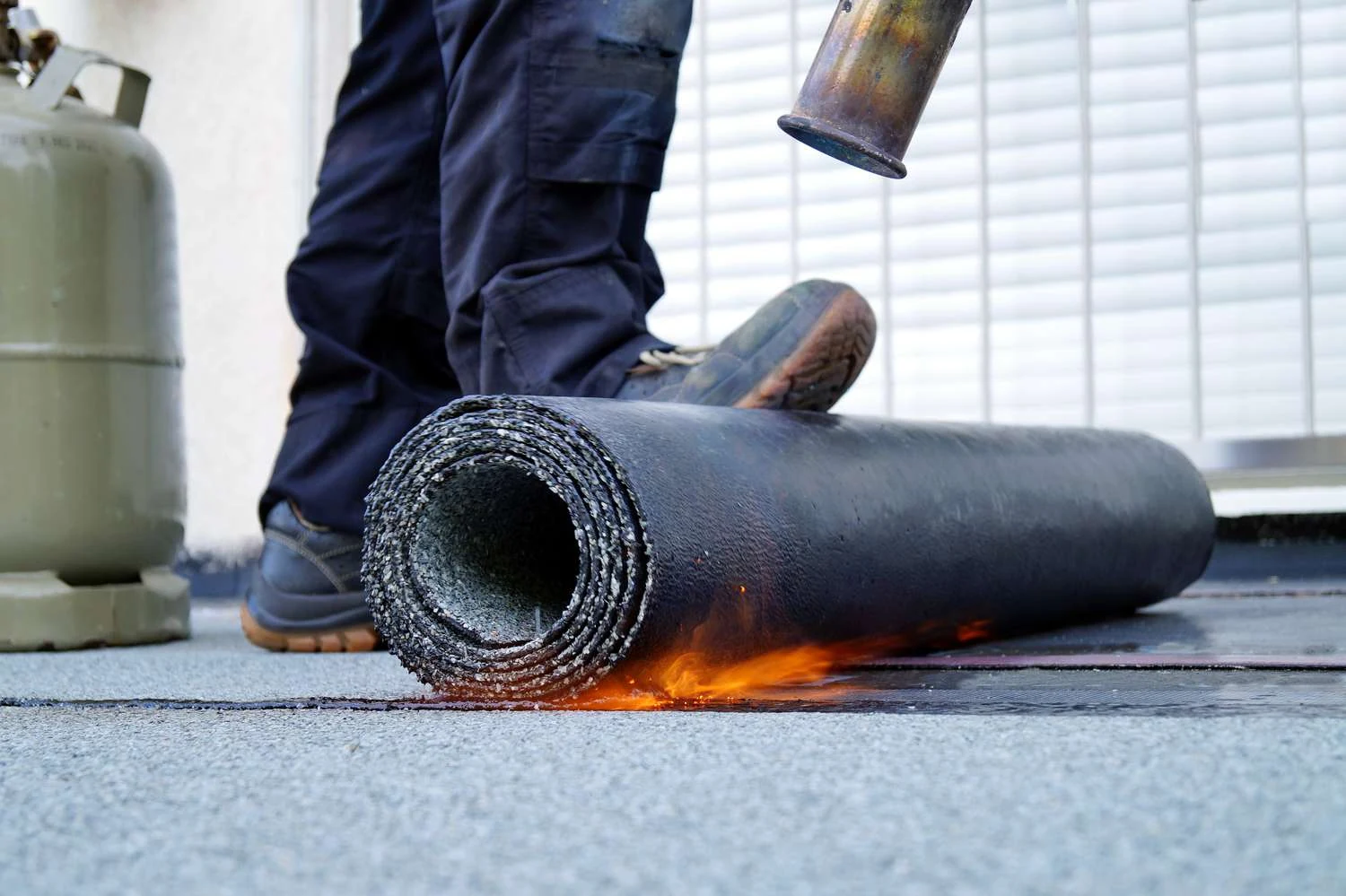
TPO seams get heat-welded, not glued. That means the crew needs a dry deck and a workable ambient temperature to get a clean weld. Syracuse winters make that a real scheduling problem. We track the forecast closely on any winter reroof and stage the tear-off and dry-in work so welding happens in windows that actually support a proper bond, not simply whenever the calendar says the job should move.
On roofs we take on between November and March, we plan for temporary dry-in with mechanically fastened cover and finish the welded seams once conditions cooperate. It costs a little more in sequencing. It saves the owner from seam failures showing up two winters later.
Snow Load and Drift at Parapets and Rooftop Units
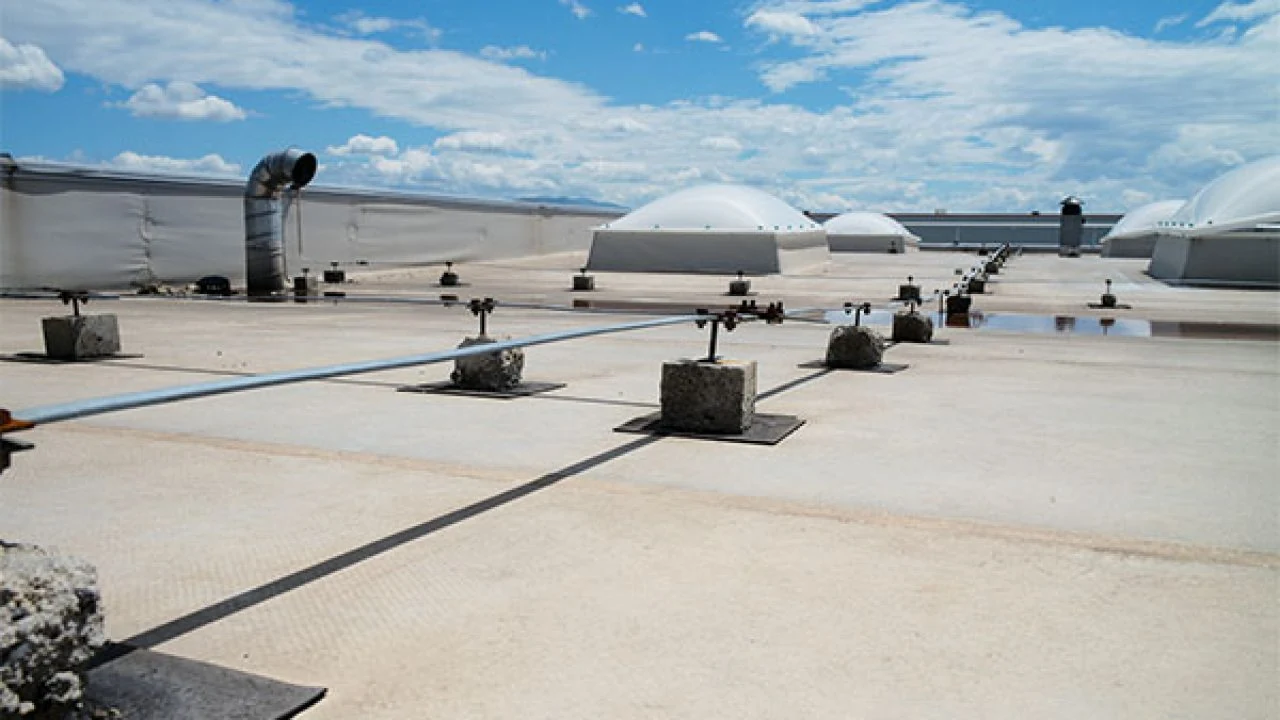
Lake-effect snow off Ontario doesn't fall evenly across a roof. It drifts. Parapet walls, rooftop units, and any change in roof height act like a fence, and snow piles against that fence three or four times deeper than the open field of the roof. A 60-mil membrane under a six-inch drift handles the load fine on a properly framed deck. The failure point is almost never the membrane itself - it's a deck or fastening pattern that wasn't designed for concentrated drift loading in the first place.
We walk every roof with drift patterns in mind before quoting a reroof, not simply square footage. A roof with a lot of rooftop equipment or stepped parapets gets a different fastening pattern and, sometimes, a different insulation package than an open, flat field.
Ice Dams and Edge Detail
Ice dams form where meltwater refreezes at a cold edge, usually where a warm roof deck meets an unheated overhang or a poorly insulated perimeter. On a flat commercial roof that shows up at scuppers, internal drains, and edge metal where water backs up under a crust of ice instead of draining. We detail edge metal and drain bowls with extra attention on 60-mil jobs because that's where a standard membrane spec is most likely to see standing meltwater sit against a seam for days at a time.
- Warehouse and light-industrial roofs with routine maintenance access only
- Strip retail and office park buildings without heavy rooftop mechanical loads
- Standard reroofs where budget is a driving factor and hail exposure is moderate
- Roofs with straightforward drainage and limited parapet drift zones
- Buildings where a 10 to 15 year membrane life meets the ownership horizon
Where We're Quoting It Right Now
With the Micron buildout underway in Clay, we're fielding a lot of calls from businesses along Route 31 and the surrounding industrial corridor getting ahead of expected growth - new leases, expanded warehouse space, buildings changing hands before the broader construction wave hits. Sixty-mil TPO is usually the first number we run on those jobs because it lets an owner reroof now at a price that makes sense before demand on labor and material tightens further.
We're also seeing it spec'd on flex-industrial space around East Syracuse and Salina, where older built-up roofs are aging out and owners want a single-ply system that's faster to install and easier to maintain going forward.
Questions We Get About 60-Mil TPO
Is 60-mil TPO strong enough for a Syracuse winter?
Yes, on a properly framed deck with fastening designed for the roof's actual drift pattern. The membrane thickness isn't usually the weak point - deck condition and fastening layout are what we check first.
Can you install TPO in the winter here?
We can, but we sequence it carefully. Welding needs a dry deck and workable temperatures, so we stage tear-off and temporary dry-in around the weather windows that support a real weld rather than rushing seams in bad conditions.
How does 60-mil compare to 80-mil on cost?
Sixty-mil runs less per square on material. We spec 80-mil where traffic, mechanical loading, or hail exposure justifies the extra thickness, and 60-mil where it doesn't.
Does drift snow damage TPO membrane?
Properly detailed membrane on a properly framed deck handles drift load fine. Problems usually trace back to a deck or fastening pattern that wasn't planned around where the snow actually piles up.
What's the typical service life on a 60-mil TPO reroof here?
Service life depends on traffic, drainage, and maintenance more than the base spec. We give a straight estimate after walking the specific roof rather than quoting a blanket number up front.
Questions About 60-Mil TPO Roofing in Syracuse, NY
Ready to Review the Roof?
Service Area
Syracuse, NY
Roofing Category
Assessment Focus
Condition
Drainage
System options
Occupied operations
Next Step