Distribution Center Roofing in Syracuse, NY
Distribution center roofing along the I-81 and Thruway freight corridors, from Central Square to Weedsport, sized for acre-scale membrane and drift snow.
Roofing the Freight Boxes Stacking Up Along I-81 and the Thruway
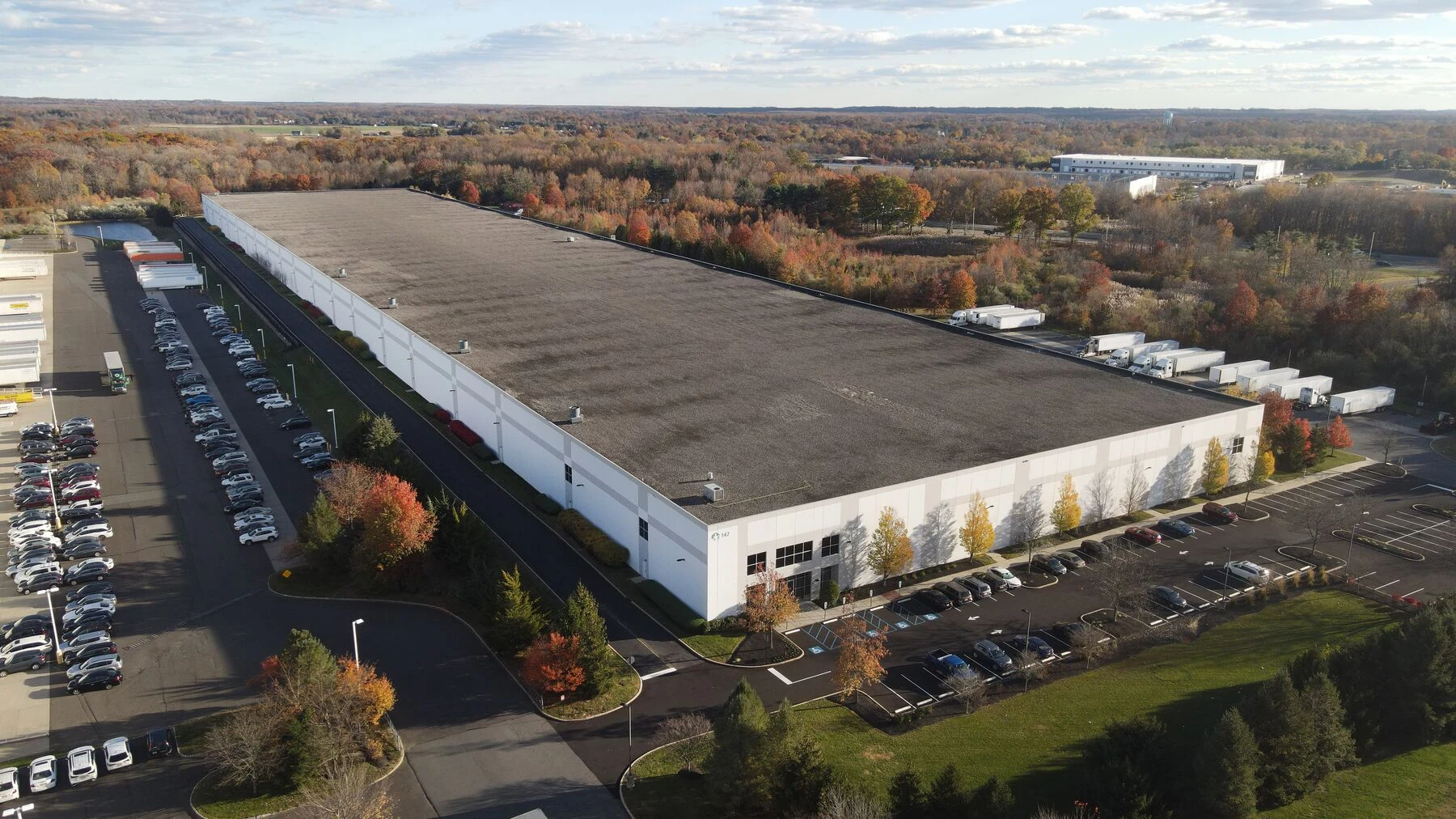
Central Square sits right at an I-81 exit that's picked up its own cluster of freight and service buildings, and Weedsport's I-90 interchange carries the same kind of logistics ground further west. Both corridors are filling in with the same building type: cross-dock distribution centers with acre-scale flat roofs and tight construction schedules.
Central Square's I-81 Exit Has Become a Freight Node
Traffic off that I-81 exit has pulled in truck service, transload, and light distribution buildings over the past several years, most of them pre-engineered metal buildings with single-ply roofing over a bar joist and deck system. These buildings go up fast, and roofing is usually one of the last trades on site before the general contractor hands the building over, which means our new-construction crews are often working under real schedule pressure to hit a certificate of occupancy date.
We've also picked up reroof and repair work on the older service buildings that were already sitting near that interchange before the newer construction arrived. Those tend to be smaller footprint but higher penetration count, since decades of tenants have added exhaust fans, vents, and equipment curbs without much coordination.
Weedsport's I-90 Corridor Runs on Truck Traffic and Tight Turnarounds
The truck stop and logistics ground around the Weedsport interchange sees heavier vehicle traffic below the roof than almost anywhere else in this market, and that changes how we plan material staging. Loading dock access has to stay open through most of the job, which usually means working the roof in sections rather than closing the whole building down at once.
Buildings in this corridor also tend to run leaner maintenance budgets than a newer distribution center, since a lot of the ownership here is smaller and more cost-conscious than a national logistics operator. We're upfront about what's a real near-term risk versus what can wait another season, because that distinction matters more to an owner watching a tighter budget.
New Construction Specs Run on a Different Clock Than Reroof Work
A new-build distribution center spec is usually set by the general contractor's schedule and the developer's target hold period, which changes the membrane-thickness math compared to an owner-occupied building planning to hold for decades. We'll spec accordingly rather than pushing the heavier system on every job regardless of who's holding the building long-term.
Reroof and recover work on existing distribution buildings runs on a completely different clock, driven by lease terms, tenant improvement schedules, and whatever the current roof condition actually allows before it needs full replacement instead of a lighter recover.
What Drives the Estimate on a Distribution Center Roof
Every distribution roof quote works through the same checklist before we name a price:
- Deck type and gauge, and whether it matches the building's actual rooftop equipment load
- Loading dock activity and how much of the roof can be closed at once
- Penetration count, including anything added by tenants after original construction
- Drainage design against realistic snow-melt volume for this corridor
- Fire wall and compartment requirements on larger cross-dock buildings
- Lease term and hold period, which affects membrane thickness and warranty length
Loading dock activity and hold period move the number as much as roof size does, because a building that can't fully close for construction takes longer to finish than the square footage alone would suggest.
Snow Drift Against Dock Doors and Truck Canopies
Distribution buildings carry a specific snow problem that warehouses without dock canopies don't see as much: drift building up against the dock wall and truck canopy structures, sometimes deep enough to affect door operation below. We check drainage and structural capacity right at those transitions, since that's where we've seen the heaviest accumulation on cross-dock buildings in this corridor.
We also flag any roof drain routed too close to a dock door heater or exhaust stack, since heat cycling near a drain can accelerate membrane fatigue in a spot that's already carrying more traffic and equipment load than the rest of the field.
Distribution Center Roofing Questions From Site and Facility Managers
Can a distribution center stay open during a roof replacement?
In most cases yes. We section the roof and coordinate with dock schedules so freight keeps moving while we work a different area of the building.
How does a new-construction roof spec differ from a reroof spec?
New construction follows the general contractor's schedule and the developer's hold-period assumptions. A reroof on an existing building gets priced against actual deck and membrane condition, which can point toward a different system entirely.
What causes leaks near loading docks specifically?
Flashing failure where the roof meets dock canopy structures, and drain lines that get clogged or damaged by dock-level activity and heat cycling from nearby equipment.
Do you handle roof work on buildings with active fire-wall compartments?
Yes, and we coordinate any roof penetration or repair near a fire wall with the building's code requirements so the compartment rating isn't compromised.
How do you price a roof on a building near the end of its lease term?
We ask about the lease and hold period up front, since a shorter-term hold may call for a lighter, less expensive system than a building the ownership group plans to keep for decades.
Questions About Distribution Center Roofing in Syracuse, NY
Ready to Review the Roof?
Service Area
Syracuse, NY
Roofing Category
Assessment Focus
Condition
Drainage
System options
Occupied operations
Next Step